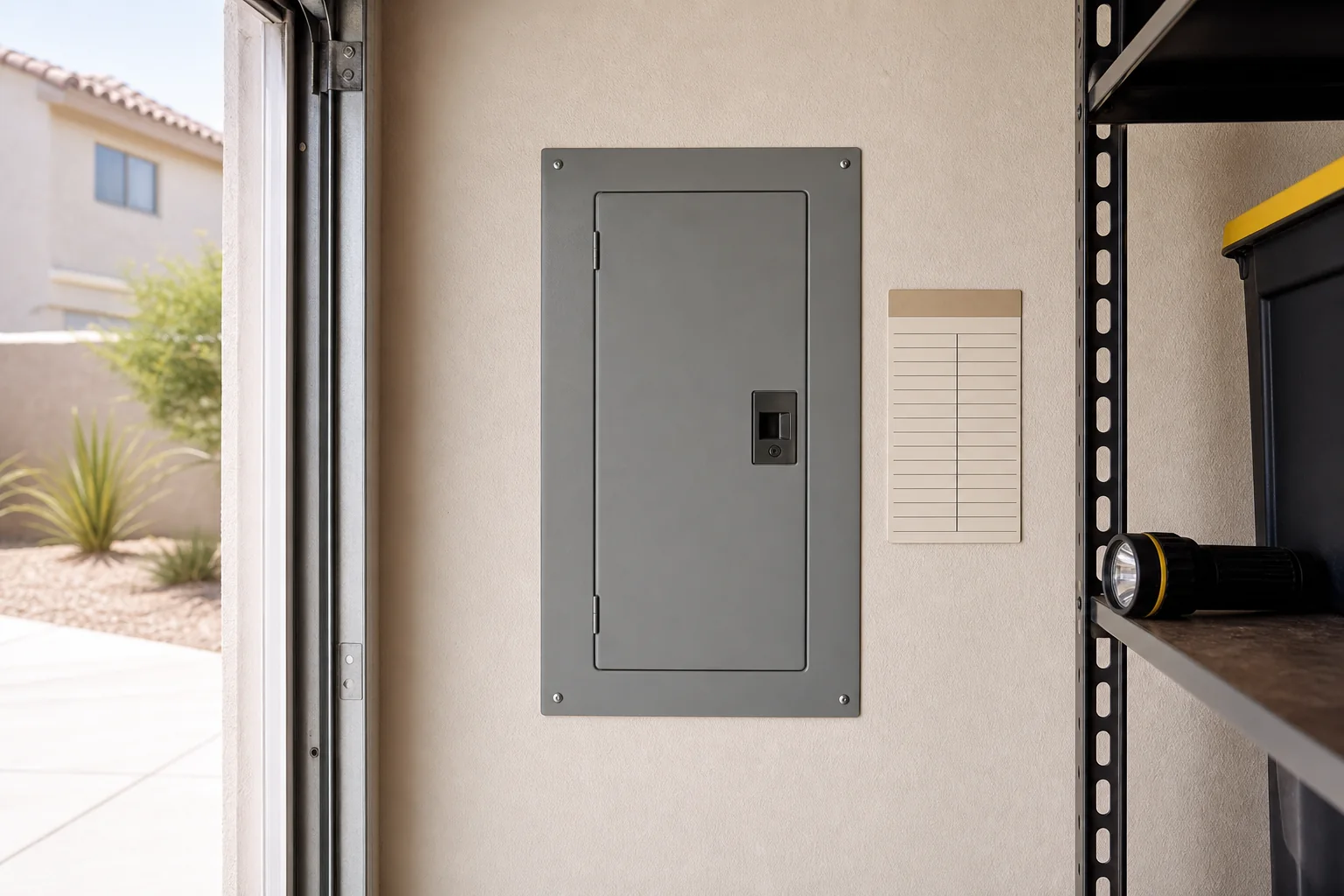
What should a homeowner know about the electrical panel?
Your panel distributes power to the home and uses breakers to protect individual circuits. The most important homeowner skill is not learning to work inside it. It is knowing where the panel is, keeping access clear, labeling circuits accurately, and recognizing when a licensed electrician needs to inspect it.
HandyMack does not open, repair, upgrade, or diagnose electrical panels. I am not a licensed electrician. Panel work, new circuits, outlet and GFCI work, and permitted electrical changes go to a licensed electrical contractor.
What is safe to check without opening the panel?
With the cover closed, you can confirm that the panel is accessible and that the directory is readable. You can note whether a breaker has tripped and follow the appliance or device manufacturer’s instructions before resetting it once.
Do not remove the panel cover. Do not touch exposed wiring. Turning off the main breaker does not necessarily make every part inside the enclosure safe. The U.S. Consumer Product Safety Commission's AFCI safety guidance specifically says panel boxes are usually electrically live even with the main breaker off and tells consumers to have a qualified electrician perform that work.
A useful homeowner checklist is short:
- Keep the route to the panel unobstructed
- Make sure the panel door closes normally
- Keep the circuit directory legible and current
- Note repeated trips, unusual sound, odor, heat, discoloration, or moisture
- Call an electrician when a symptom repeats or looks unsafe
When is a tripped breaker a warning sign?
A breaker trip means the protective device interrupted the circuit. Before resetting it, turn off or unplug the device that may have caused the overload and check its instructions. If the breaker trips again, will not reset, or trips without an obvious temporary cause, leave it off and call a licensed electrician.
Never replace a breaker with a higher rating or hold it in position. Breaker and wire sizing is an electrical design decision, not a workaround for nuisance trips.
Call an electrician promptly for these signs
Treat these as reasons to stop using the affected circuit and get qualified help:
- A burning or hot-plastic smell near the panel or an outlet
- Scorching, discoloration, smoke, sparks, or visible damage
- Buzzing, crackling, or persistent unusual noise
- Water, rust, or moisture at the panel
- A breaker or panel surface that seems unusually hot
- Repeated trips, flickering tied to appliance use, or loss of power with no clear cause
If there is smoke, fire, or immediate danger, leave the area and call emergency services. Do not approach electrical equipment through standing water.
What do GFCI and AFCI protection do?
GFCI protection is designed to reduce shock risk when current travels on an unintended path. It is commonly used where electricity and moisture may meet. AFCI protection is designed to detect certain dangerous arcing conditions. Which locations and circuits require each type depends on the home, the work being done, and the code adopted by the local jurisdiction.
Homeowners can use the test and reset controls on accessible GFCI receptacles according to the device manufacturer’s directions. A device that does not test or reset correctly needs evaluation. Installing or changing the protection itself belongs with a licensed electrician.
When might a panel need professional evaluation?
An electrician—not a handyman or an online checklist—should evaluate panel capacity and condition. Reasons to schedule that conversation include adding a major electrical load such as an EV charger, repeated breaker trips, visible deterioration, a full panel with planned new circuits, an older system with unknown history, or renovation work that changes electrical demand.
Phoenix air conditioning creates substantial seasonal demand, but dimming lights or trips do not prove the panel is “too small.” An electrician needs to assess the service, loads, circuits, connections, and equipment before recommending an upgrade.
What electrical work fits HandyMack?
My work stays narrow: selected like-for-like fixture, ceiling-fan, smart-switch, or dimmer replacements where the existing box, wiring, and conditions are appropriate for handyman work. I stop when the job needs new wiring, a new circuit, panel access, troubleshooting, permitting, or licensed electrical judgment.
If your goal is a tech installation, I can often help plan the non-panel side. For example, security cameras may use low-voltage Power over Ethernet, and smart-home setup may reveal that a device needs an electrical change. My smart-home starting guide explains how I plan those systems before hardware goes on the wall. When it does, I separate my scope from the electrician’s.
Electrical panel questions
Can HandyMack replace a breaker or add a circuit?
No. Breakers, new circuits, panel modifications, and electrical diagnosis are licensed-electrician work.
Should I reset a breaker that keeps tripping?
No. One reset after removing an obvious temporary load may follow the equipment instructions. A repeated trip means leave the circuit off and have a licensed electrician find the cause.
Can I open the cover if the main breaker is off?
No. Parts of the service equipment may remain energized. Homeowners should leave the cover in place and keep inspection or repair inside the panel to qualified professionals.
Can HandyMack label my panel?
Accurate labels require identifying circuits safely. If the directory is incomplete, a licensed electrician is the right person to trace and verify the system, especially when any wiring or panel access is involved.
If your project includes both a tech install and electrical work, describe the job before booking. I will define the HandyMack portion clearly and tell you where a licensed electrician needs to take over.