Is this plumbing problem a DIY fix or a plumber call?
Use three questions: Is water actively escaping? Is the problem inside a wall, floor, or main line? Does the repair change the home’s plumbing system rather than replace a fixture-level part? If the answer to any of those is yes, stop the water if you can do so safely and call a licensed plumber.
HandyMack is not a plumbing contractor. My scope near plumbing is deliberately narrow: simple non-pipe items such as replacing a compatible showerhead, cleaning an accessible stopper, or renewing failed caulk around a fixture. I refer faucets, toilets, valves, supply and drain piping, active leaks, water heaters, sewer problems, and permitted work to licensed plumbers.
Safe checks most homeowners can make
Test a toilet for a silent leak
The EPA’s WaterSense home-maintenance checklist recommends putting a few drops of food coloring in the toilet tank and waiting about ten minutes without flushing. If color appears in the bowl, the tank is leaking past the seal. Flush afterward so the dye does not stain.
A worn or poorly seated flapper is a common cause. Replacing a compatible flapper can be a reasonable homeowner job if the shutoff works, the tank is not cracked, and the issue is clearly identified. If the toilet still runs, rocks at the floor, leaks around its base, or the valve will not shut off, bring in a plumber.
Clean a sink stopper or hair catcher
A slow bathroom sink or shower may have hair and soap buildup close to the opening. Removing and cleaning an accessible stopper or strainer is a low-risk first step. Do not force a stuck assembly or keep pouring chemicals into a drain. Repeated backups, multiple slow fixtures, sewage odor, or water appearing in another drain point to a larger drain problem.
Check visible connections without dismantling them
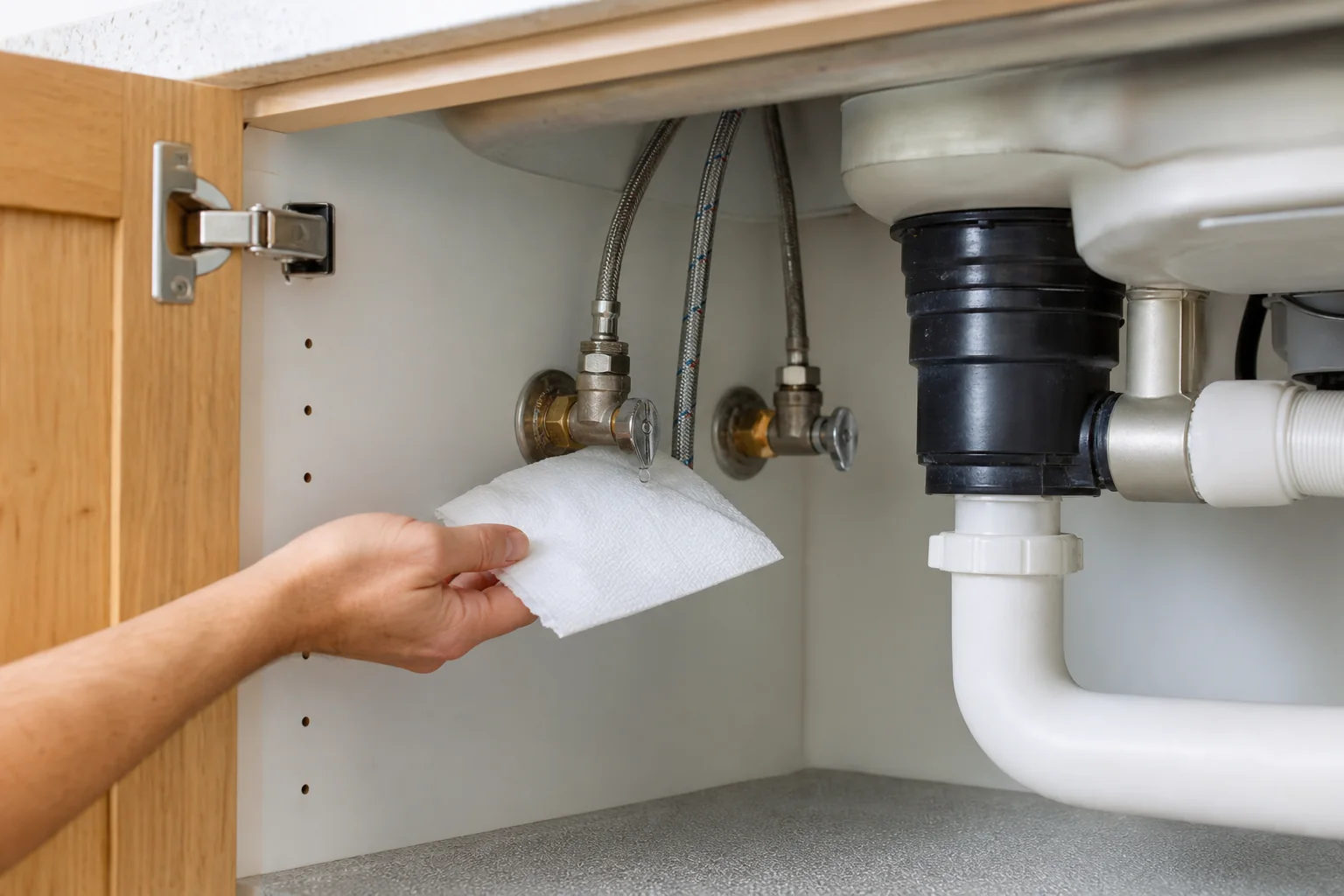
Look under sinks and around toilets for moisture, staining, corrosion, or swollen cabinet material. Dry the area and use a paper towel to confirm whether a connection is actively wet. Observation is useful; tightening an unknown fitting until it “stops” can crack a part or make a leak worse.
Know where your home’s main water shutoff is before an emergency. If a valve is corroded, inaccessible, or difficult to operate, have a plumber address it before you need it.
Small maintenance jobs near a fixture
A few jobs near plumbing do not require me to alter the plumbing system. Replacing a compatible showerhead, cleaning an accessible stopper, replacing a removable aerator, or renewing failed caulk around a fixture may fit a handyman visit when there is no active leak or damaged connection.
I do not diagnose or repair pipe leaks, replace valves or supply lines, install faucets or toilets, clear hidden drain blockages, or open plumbing inside a wall. If the symptom points beyond a simple removable part or surface seal, I refer it to a licensed plumber.
If you have several non-plumbing hardware and maintenance items, the general handyman service is the best place to start. My Phoenix summer checklist also includes a quick visible water-and-irrigation walk-through.
Call a licensed plumber for these problems
Active or hidden leaks
Water from a pipe, wall, ceiling, slab, or unknown source needs prompt professional diagnosis. Shut off the affected fixture or main supply only if you know the correct valve and can reach it safely. Keep people away from wet areas near electrical equipment.
Water-heater trouble
A water heater combines pressurized water with gas or high-voltage electricity. Leaking tanks, relief-valve problems, burner issues, wiring, and replacement belong with qualified licensed professionals.
Multiple backed-up drains
One dirty stopper may be local. Several drains backing up, a toilet bubbling when another fixture runs, or sewage odor can indicate a branch or sewer-line problem. Stop using water and call a plumber.
Supply, drain, or vent piping
Work inside walls, under slabs, at the main service, or on the drain-waste-vent system is not HandyMack scope. So are projects requiring permits or changes to the installed plumbing layout.
Phoenix-specific things to notice
Heat can be hard on exterior components and exposed hoses. Mineral scale is also common in Valley homes, but white residue alone does not diagnose the condition of a pipe or appliance. Look for active moisture, changing performance, corrosion, and manufacturer guidance rather than guessing based on one symptom.
If you leave for part of the summer, inspect visible supply hoses and shutoffs before the trip. Follow manufacturer instructions for appliances, and consider asking a licensed plumber about any valve or water-heater concern well before departure.
Plumbing questions homeowners ask
Can HandyMack repair a leaking pipe?
No. Pipe leaks and work on supply or drain piping go to a licensed plumber. I can help only with appropriate non-pipe maintenance items such as a compatible showerhead, removable aerator, accessible stopper, or surface caulk.
Can I use chemical drain cleaner on a slow drain?
I do not recommend repeatedly treating an unknown blockage with harsh chemicals. Clean an accessible stopper or hair catcher first. If the drain remains slow or backs up again, a plumber can diagnose the actual problem.
Who should replace a water heater?
A qualified licensed plumbing professional, with the appropriate gas or electrical work handled as required. HandyMack does not repair or replace water heaters.
Not sure which side of the line your job falls on? Send a photo and description. I will tell you plainly whether it sounds like a small non-pipe maintenance task or a licensed-plumber call.